Physical Address
304 North Cardinal St.
Dorchester Center, MA 02124
Physical Address
304 North Cardinal St.
Dorchester Center, MA 02124

The prognosis for pancreatic acinar cell carcinoma (ACC) has long been viewed through a grim, monolithic lens, often conflated with its notoriously aggressive cousin, pancreatic ductal adenocarcinoma (PDAC). Traditional statistics, citing a five-year survival rate hovering between 25-50% for resectable disease and plummeting to less than 10% for metastatic cases, paint a stark but incomplete picture. A more forward-looking and nuanced perspective reveals that the prognosis of ACC is no longer a static number derived solely from anatomical staging. Instead, it is evolving into a dynamic, personalized forecast shaped by a revolution in molecular diagnostics, targeted therapies, and sophisticated monitoring. The question is no longer just “Can it be cut out?” but increasingly, “What is its molecular blueprint and how can we continuously outmaneuver it?”
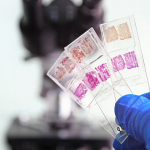
The foundational pillar of ACC prognosis remains surgical resectability. A patient presenting with a localized, surgically removable tumor has the single greatest chance of achieving long-term survival. This fact anchors the clinical reality and underscores the desperate need for earlier detection. However, this is where the old prognostic model begins to fray. Even among patients who undergo successful R0 resections (microscopically margin-negative), recurrence rates are high. This variability in outcomes, even within the same stage group, hinted at underlying biological differences that traditional imaging could not see. The cutting edge of prognostication now lies in decoding these differences through next-generation sequencing (NGS).tissue array
The integration of molecular profiling is fundamentally reshaping the ACC prognosis. We now understand that ACC is not a single disease entity but a collection of rare subtypes, each with distinct genomic drivers. The identification of targetable alterations like *BRAF V600E* mutations, homologous recombination deficiency (HRD) including *BRCA1/2* mutations, or high microsatellite instability (MSI-H) has transformed the prognostic landscape. A patient with metastatic ACC harboring a *BRAF* mutation, for instance, is no longer simply a “stage IV” patient with a dismal prognosis. They are a candidate for highly effective BRAF/MEK inhibitor therapy, which can yield profound and durable responses, fundamentally altering their life expectancy in a way that historical survival curves could never predict. This molecular stratification moves prognosis from a population-based statistic to an individualized therapeutic roadmap.
Furthermore, the concept of prognosis is becoming temporal and fluid, thanks to advances in liquid biopsy. The traditional post-treatment model involves periodic CT scans to look for radiographic evidence of recurrence. The frontier, however, is the use of circulating tumor DNA (ctDNA) to monitor for minimal residual disease (MRD) after surgery and during adjuvant therapy. A patient who becomes ctDNA-negative following treatment has a demonstrably better prognosis than one whose ctDNA levels persist or rise, even before a tumor is visible on a scan. This allows for a dynamic, real-time assessment of treatment efficacy and an early warning system for relapse, enabling pre-emptive therapeutic interventions. Prognosis is thus no longer a one-time declaration but a continuously updated status report.
In conclusion, the five-year survival rate for pancreatic acinar cell carcinoma remains a valuable, albeit coarse, benchmark. The true vanguard of prognostic assessment, however, is a multi-layered model that synthesizes anatomy, molecular pathology, and real-time molecular monitoring. The future prognosis for an individual patient is not a fixed percentage but a dynamic equation: Prognosis = (Anatomical Stage) + (Molecular Drivers & Targets) + (Depth of Molecular Response). This integrated, forward-thinking approach offers a more realistic, actionable, and ultimately more hopeful outlook for patients facing this challenging disease, shifting the focus from surviving for five years to strategically managing a chronic, complex condition.