Physical Address
304 North Cardinal St.
Dorchester Center, MA 02124
Physical Address
304 North Cardinal St.
Dorchester Center, MA 02124

In the intricate theater of head and neck oncology, few adversaries are as enigmatic and relentless as perineural invasion (PNI) in adenoid cystic carcinoma (ACC). To describe PNI in mere clinical terms—as tumor cells abutting or infiltrating a nerve—is to capture the silhouette but miss the phantom. It is not a simple invasion; it is a stowaway’s journey, a covert hijacking of the body’s own information superhighway. To treat it effectively, we must stop thinking of it as a local phenomenon and start treating it as the insidious, systemic escape artist it truly is.
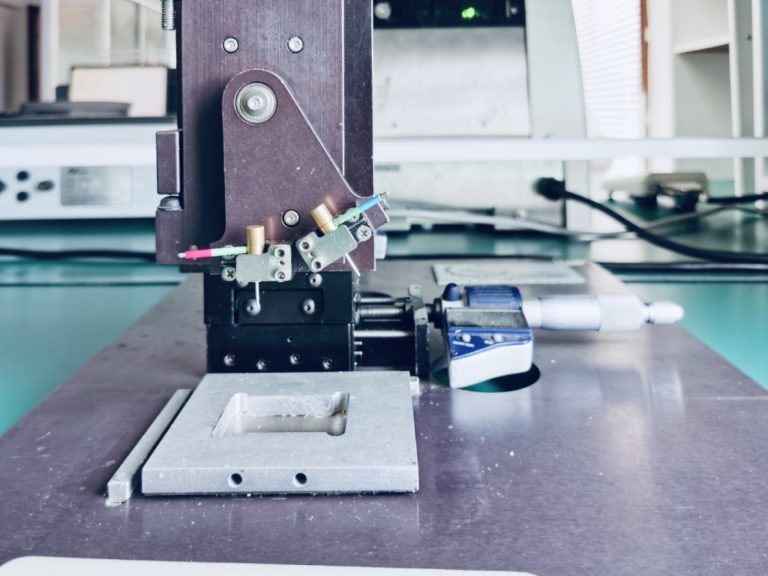
The traditional therapeutic approach has been a blunt, two-pronged siege: surgery and radiation. The surgeon’s role is that of a demolition expert, tasked with excising the primary tumor with wide, negative margins. The goal is to remove the “nest” and any visible “tunnels.” However, PNI’s cruelty lies in its invisibility. Tumor cells can travel millimeters, even centimeters, along a nerve, leaving the primary tumor site far behind, like silent spies dispatched to distant territories. They elude the surgeon’s eye and the scalpel’s reach, creating a microscopic foothold for future recurrence. This is why even the most meticulously executed “radical” surgery can feel like a partial victory.tissue array
Radiation therapy then follows, acting as a “scorched-earth” policy. Modern techniques like Intensity-Modulated Radiation Therapy (IMRT) and proton therapy allow radiation oncologists to paint a dose of high-energy particles along the suspected neural pathways, creating a “kill zone” designed to eradicate these hidden cells. This is a crucial advance, transforming radiation from a blunt weapon into a targeted missile. Yet, even this sophisticated strategy has its limits. We are still, to a large extent, guessing the routes of the stowaways. We irradiate the known highways—the major nerves—but what of the unseen country roads and the perineural space, a potential sanctuary for these rogue cells?
The truly novel frontier in treating PNI lies in abandoning the purely geographical mindset and embracing a biological one. The question is not just “where are the cells?” but “why are they traveling, and what fuels their journey?” This is where molecular targeted therapy enters the fray, shifting our role from besiegers to saboteurs.
ACC is driven by a characteristic gene fusion, MYB-NFIB. This fusion acts as a master switch, turning on a program of growth, survival, and, critically, invasion. PNI is not a random event; it is a directed behavior, likely orchestrated by molecular signals that attract tumor cells to nerves. Researchers are now identifying these signals—chemical cues like nerve growth factor (NGF) and its receptors—that act like a homing beacon for ACC cells. The new therapeutic paradigm is to disrupt this communication. By developing drugs that block these signals, we can, in essence, destroy the stowaway’s map and compass. We can make the nerve highway inhospitable, forcing the tumor cells to remain in place where they can be more easily targeted and destroyed.
Furthermore, the perineural space is a unique immune-privileged microenvironment. It’s a sanctuary where tumor cells can hide from the body’s own immune system. The next generation of treatments aims to breach this sanctuary. Immunotherapies, which have revolutionized other cancers, have been less effective in “cold” tumors like ACC. But the strategy is evolving. By combining targeted drugs that can “light up” the tumor cells with immunotherapies that “unleash” the T-cells, we can train the body’s own police force to recognize and hunt down the stowaways, no matter how deeply they are embedded along the neural pathways.
In conclusion, the treatment of perineural invasion in ACC is undergoing a profound transformation. We are moving beyond the simplistic siege of cutting and burning. The future is a multi-layered intelligence operation: surgical reconnaissance, strategic radiation containment, and, most importantly, biological sabotage. By understanding the language of the stowaway and cutting off its lines of communication and support, we move closer to a day when the neural highways are no longer conduits for invasion, but simply nerves, restored to their vital, peaceful purpose.